Content
- What Is The Cost?
- Difference Between Cost And Price
- Example Of Cost Vs Price
- Price Vs Cost Differences
- Introduction To A Cost Analysis Report
- The Difference Between Purchase Price And Total Cost Of Ownership And Why It Matters
- Related Differences
- Whats The Difference Between Average Net Price And Cost Of Attendance?

The value of price may increase or decrease depending on the demand in the market, while the value of cost may rise or fall depending on the fluctuation in the market. The price of the product is decided after including all the other factors, while the cost is the first factor that is listed.

The second aspect of the issue involves how to do a cost/price analysis of the parts themselves for purposes of evaluating the vendor’s prices for negotiations. https://accountingcoaching.online/ It is not uncommon for a vendor in this situation to refuse to furnish cost data for its products since that information is proprietary.
What Is The Cost?
Find materials, components, equipment, MRO supplies and more. Stay up to date on industry news and trends, product announcements and the latest innovations. Become part of North America’s largest and most active network of B2B buyers and industrial/commercial suppliers. Using the aforementioned strategies can help identify whether there has been any escalation in the price. Cost of goods sold is an important part of accounting that…
- In that context, price, and cost, the two mentioned terms are used widely and interchangeably.
- SBA loans have low rates and long terms, making them a desirable…
- Meeting speaker Sharon Hauht is the Manager of Purchasing and Contracts for theRegional Transportation Commission of Southern Nevada.
- ” that answer is readily apparent too, via sign, cashier, or Google.
- Examples of costs are the cost of goods sold, the cost of advertising, and the cost of employee compensation.
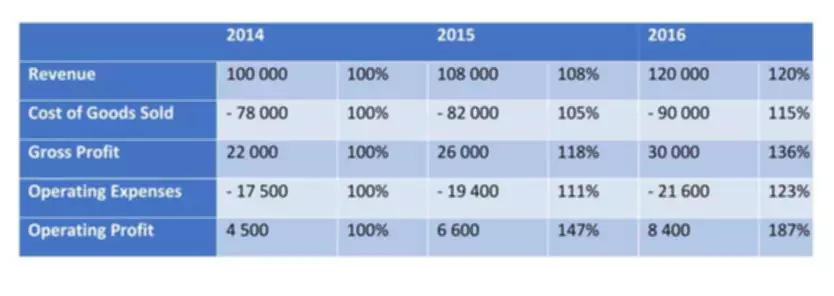
When creating your income statement, you have different line items for income and expenses like revenue, cost of goods sold , and operating expenses. Lumping your expenses together is a recipe for inaccurate recordkeeping, reporting, and decision-making. Understand the difference between direct and indirect expenses to avoid these issues. There are a lot of articles and advice about product pricing. It’s easy to fall into a black hole if it’s your first time pricing a product.
Difference Between Cost And Price
Further, it is one of the four P’s of the marketing mix, the other being product, place and promotion. «Cost» refers to an expense, a hole in your pocket, or a liability for meeting a business goal for item being referred to. » Price» is objectively viewed money equivalent tagged for goods. Harold Averkamp has worked as a university accounting instructor, accountant, and consultant for more than 25 years. He is the sole author of all the materials on AccountingCoach.com.
A notable exception is direct labor costs, which usually remain constant throughout the year. Typically, an employee’s wages do not increase or decrease in direct relation to the number of products produced.
Example Of Cost Vs Price
Keep in mind that people have different tastes and preferences. Buyers usually want to see the value of their money after paying for a product. Commercial transactions involve price, cost, and value.

In contrast, price refers to the amount that the business charges its customers for providing their goods and services to the customer, and the customer has to pay such an agreed amount to get the goods or services. Cost-plus pricing starts with an estimate of the costs incurred to build a product, and a certain profit percentage is added to establish the price.
Remember that the cost of a product is more than the literal cost of the item; it also includes overhead costs. Overhead costs may include fixed costs like rent and variable costs like shipping or stocking fees. You must include these costs in your estimate of the real cost of your product.
Price Vs Cost Differences
Understand how to use cost-plus pricing and target costing to establish prices. If the COA doesn’t account for unique costs for individual families, they can use this to appeal financial aid awards. For example, many schools have a set amount for transportation. However, this amount is an average that doesn’t come anywhere close to covering the expense of students having to travel long distances. Try to do this on a regular basis by getting feedback from customers about your pricing. The total should give you a good idea of the gross revenues you will need to generate to ensure you cover all those costs. Choose either the term “cost” or “price” and only use that one.
Supply and demand achieve a balance in which the quantity of a product matches its market demand. This concept allows for constant price adjustments as the market fluctuates. From this perspective, the price implies the amount of money involved in the production, marketing and distribution of a product. The term can also refer to the total amount of money required to maintain a product or service. For example, if a widget costs $10 to build, then its price must be higher than $10, or else the business cannot earn a profit on its sale. Another interaction between price and cost is that costs are subtracted from prices to arrive at a firm’s profit, either for individual products or in aggregate for the entire firm. For example, if a company generates $1 million of sales from its established product prices, and it incurs $800,000 of costs, then its profit is $200,000.
- This article provides further differences between price, cost, and value in a tabular form.
- However, as mentioned at the beginning of the article, the two terms have completely different meanings when applied in economics or business.
- The Cost of Attendance and Average Net Price are actually defined by the government.
- Keen is recognized by GoodFirms as an industry leader in the space of Big Data Analytics.
- Better to read about the difference between panic attacks and anxiety attacks than to have one.
- The estimated value of the contract will be about $250,000, and the statement of work is sufficiently definitive (in the Agency’s opinion) to allow consulting firms to give you firm fixed price proposals.
For costs set by state law or fixed by the terms of the contract, you will not have to perform a cost analysis (e.g., indirect cost rate established by the state). But for other costs not established by regulation or contract, such as direct labor rates/hours and materials, and for the proposed profit, you will need to verify the reasonableness of the costs and profit proposed. You will also have to ensure that there are no costs being proposed as direct charges to you that should be recovered by the overhead charge (i.e., ensure there are no cost duplications in the proposal). Evaluation of the materials costs would normally be accomplished by reviewing the prices quoted competitively to the contractor, or prices quoted in catalogues for items sold to the general public. Although you are looking at «prices» quoted by materials suppliers, they are «costs» to your contractor and this would be the standard way of performing a «cost analysis» of materials costs. Keep in mind that either a price analysis or a cost analysis is required for every procurement action, and there are no exceptions.
Introduction To A Cost Analysis Report
” that answer is readily apparent too, via sign, cashier, or Google. The offerors must independently contend for the contract that is to be awarded to the responsive and responsible offeror submitting the lowest evaluated price. Q. Are there any cost proposal evaluation tools available?
It also involves the future acquisition of the service or product if the client or consumer pays the said amount. An approach to pricing that integrates the product design, desired price, desired profit, and desired cost into one process beginning at the product development stage. An approach to establishing prices that starts with an estimate of the costs incurred to build a product, and a certain profit Price vs. Cost – What’s the Difference? percentage is added to establish the price. It is a fact of life in business that you will have to raise prices from time to time as part of managing your business prudently. If you never raise your prices, you won’t be in business for long. You have to constantly monitor your price and your cost so that you are both competitive in the market and you make the kind of money you deserve to make.
Under FAR regulations, it is the responsibility of the proposer to determine price reasonableness, either at the time of proposal or at the time an acquisition is made. It is not the responsibility of the contracting officer. If the buyer has a history of the purchase of the item over several years, this information, taking into account inflation factors, can be used to determine a price fair and reasonable. The historical pricing summary must be supported by appropriate documentation (computer reports or copies of PO’s).
- It’s important to know the difference between the types of costs because it gives you a greater understanding of your product or service, thus leading to more competitive pricing.
- It is a good idea to obtain a name of another recent purchaser and confirm that this was the price paid.
- A.There are two aspects to this issue that we would address.
- For the seller, the price is a future income, whereas the cost represents past expenses.
- If so you may rely on the vendor’s published catalogue prices for those items.
- The net price is sometimes confused with the term «net cost.» Net cost is the amount paid by the customer after all discounts and rebates are applied.
The way that I have found success is by assisting my clients with building the right culture, from a safety standpoint, to avoid claims all together. As you can see there is little to no COST, from the prospects standpoint, but just the right partnership can be the world of difference. As kids, if we knew the price to play Pac-Man was a quarter, that’s all we’d need to play the game. Who didn’t ask their parents, “Can I please have a quarter? ” Today, when we ask, “What’s the price of that television?
The difference between the two can result in a cash surplus or deficit. The company reports profits and losses for a particular duration of time and seeks working capital requirements. Profit MarginProfit Margin is a metric that the management, financial analysts, & investors use to measure the profitability of a business relative to its sales.
Whats The Difference Between Average Net Price And Cost Of Attendance?
The price element differs from the other three elements in the sense that it is the price which generates revenue, while the other three adds to the cost of production. Best Supply Company sold 10,000 pounds of materials to Mack Manufacturing Co. for $3 per pound. Mack recorded the materials in its Materials Inventory account at its standard cost of $2.80 per pound. The difference between Mack’s actual cost of $3 per pound and Mack’s standard cost per pound of $2.80 times 10,000 pounds is a $2,000 cost variance for Mack. However, accountants refer to this unfavorable cost variance as a materials purchase price variance.
There are three straightforward steps to calculating a sustainable price for your product. That’s what we’re tackling in this product pricing how-to guide. Studies have also shown that small variations in price can raise or lower profitability by as much as 20% or 50%.
For example, when Keen client Content Science first set out to develop what is now ContentWRX, the leadership team knew they needed an agile product. They considered building ContentWRX from scratch, but the system’s technical requirements would have taken significant capital and six to nine months to develop. Keen allowed the team to test the full range of the platform’s capabilities in a sandbox. Content Science quickly found that Keen had a unique ability to capture key customer behavior data directly and generate valuable reports through the front-end experience. Keen’s capabilities also freed Content Science’s development team to focus on how consumer data would be scored and analyzed, rather than on how it would be collected. To find out how much it truly costs you to produce a product or perform a service, you might also consider an activity-based costing system. Your income statements break down your business’s profits and losses during a period.